

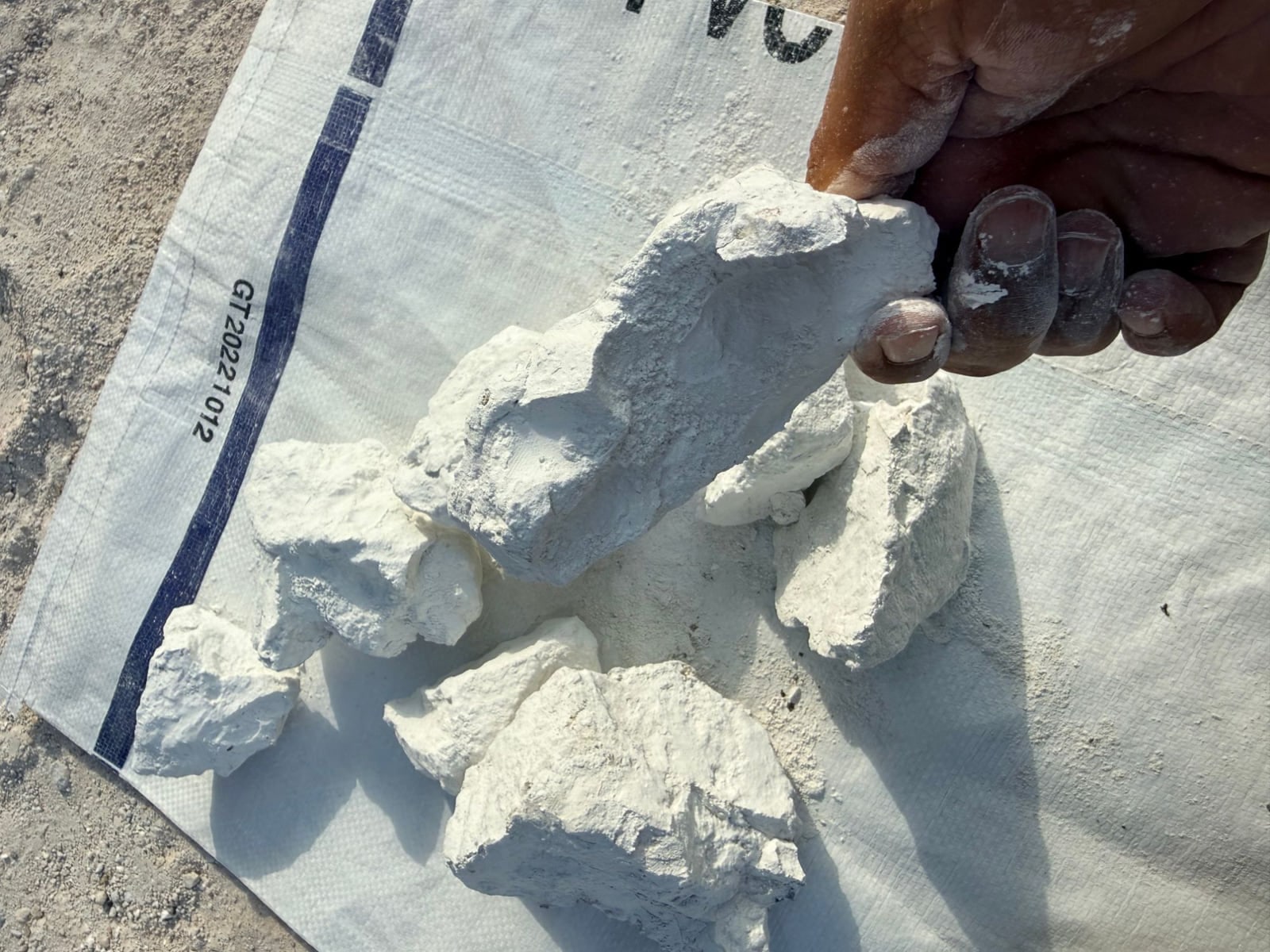
High-calcium burnt lime — Chunna Kali — in lump and graded sizes for metallurgical, chemical and treatment duty.
- Sizes
- 0 – 3 mm · 0 – 10 mm · 10 – 50 mm
- Packing
- 10 kg bags · 40 kg bags · Jumbo bags · Loose / bulk tipper
- Min. order
- 44 tonnes
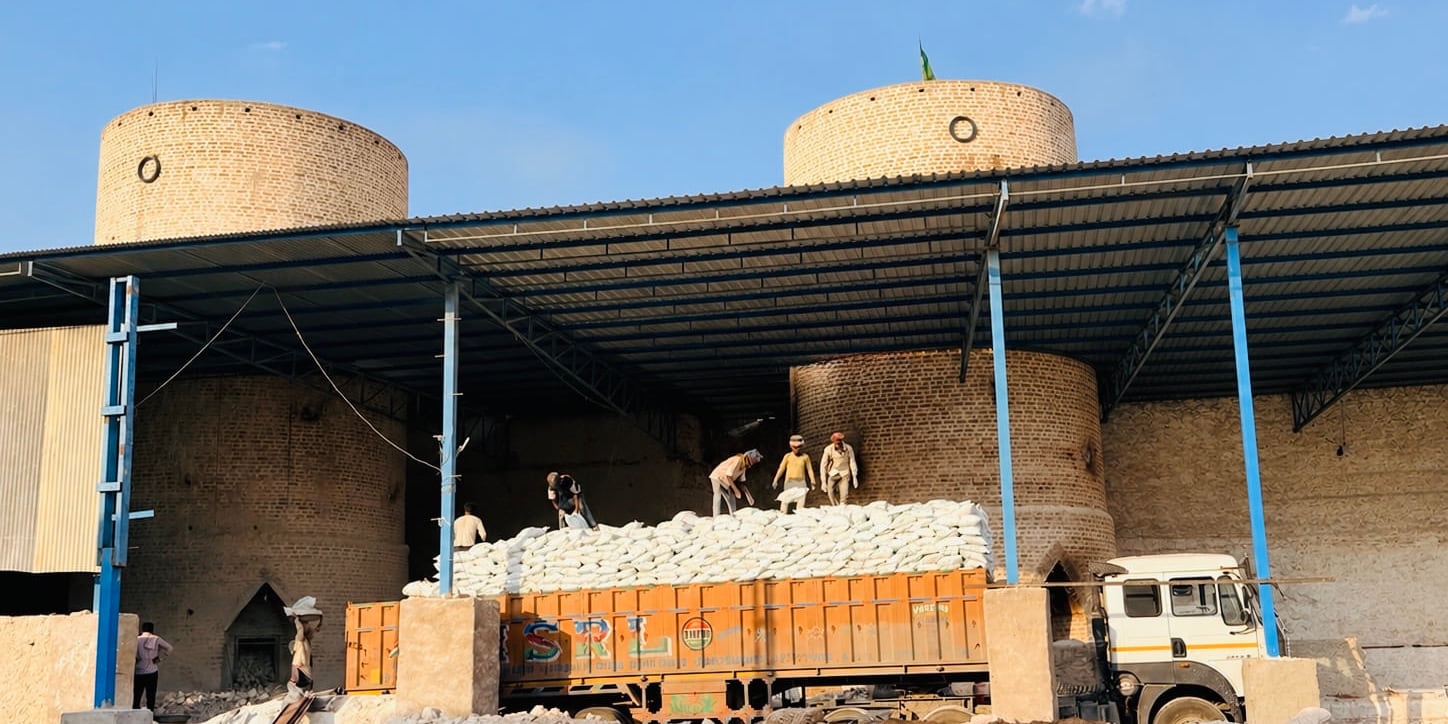
Dispatched from Borunda
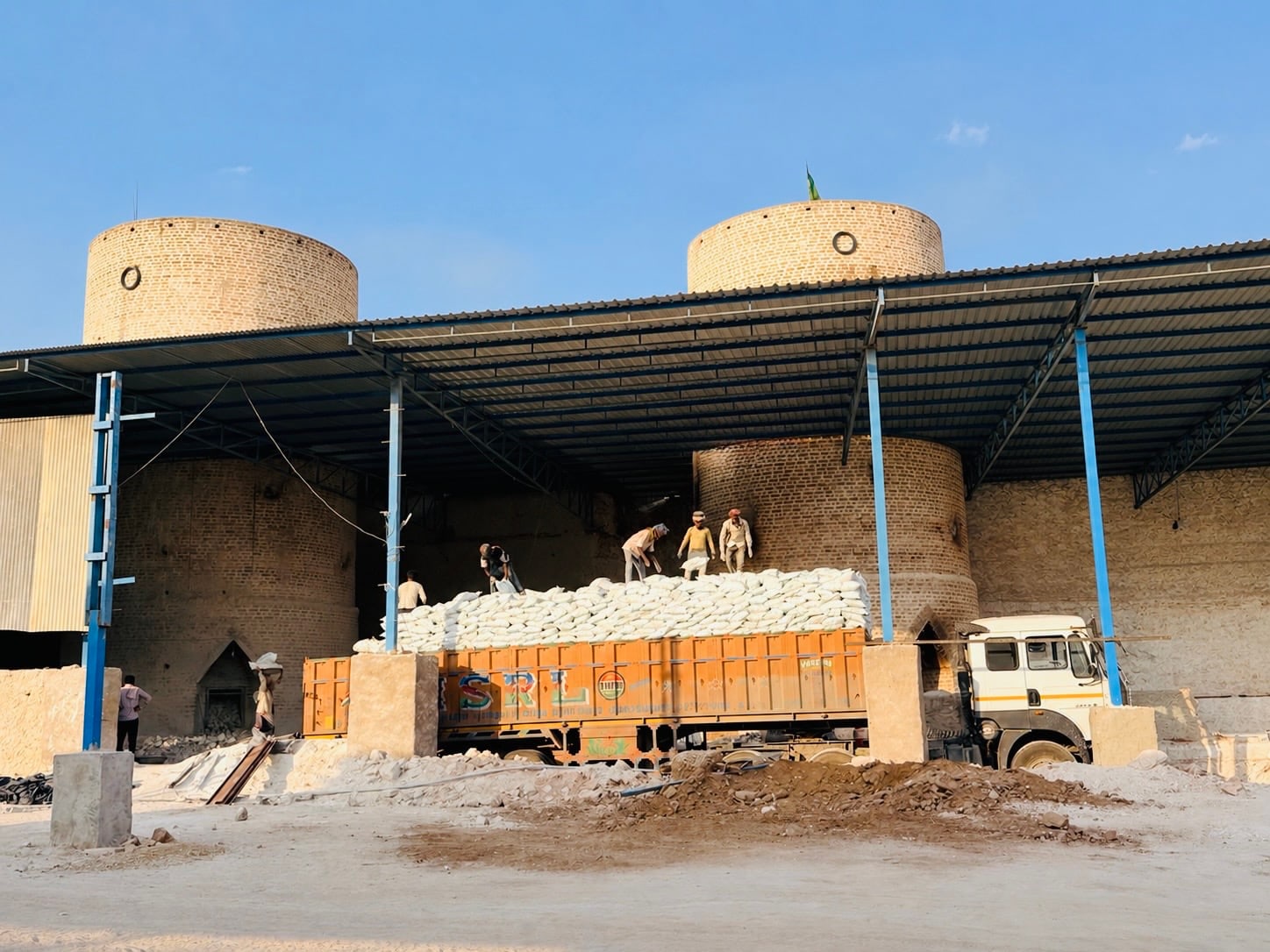
Loaded at the Kiln
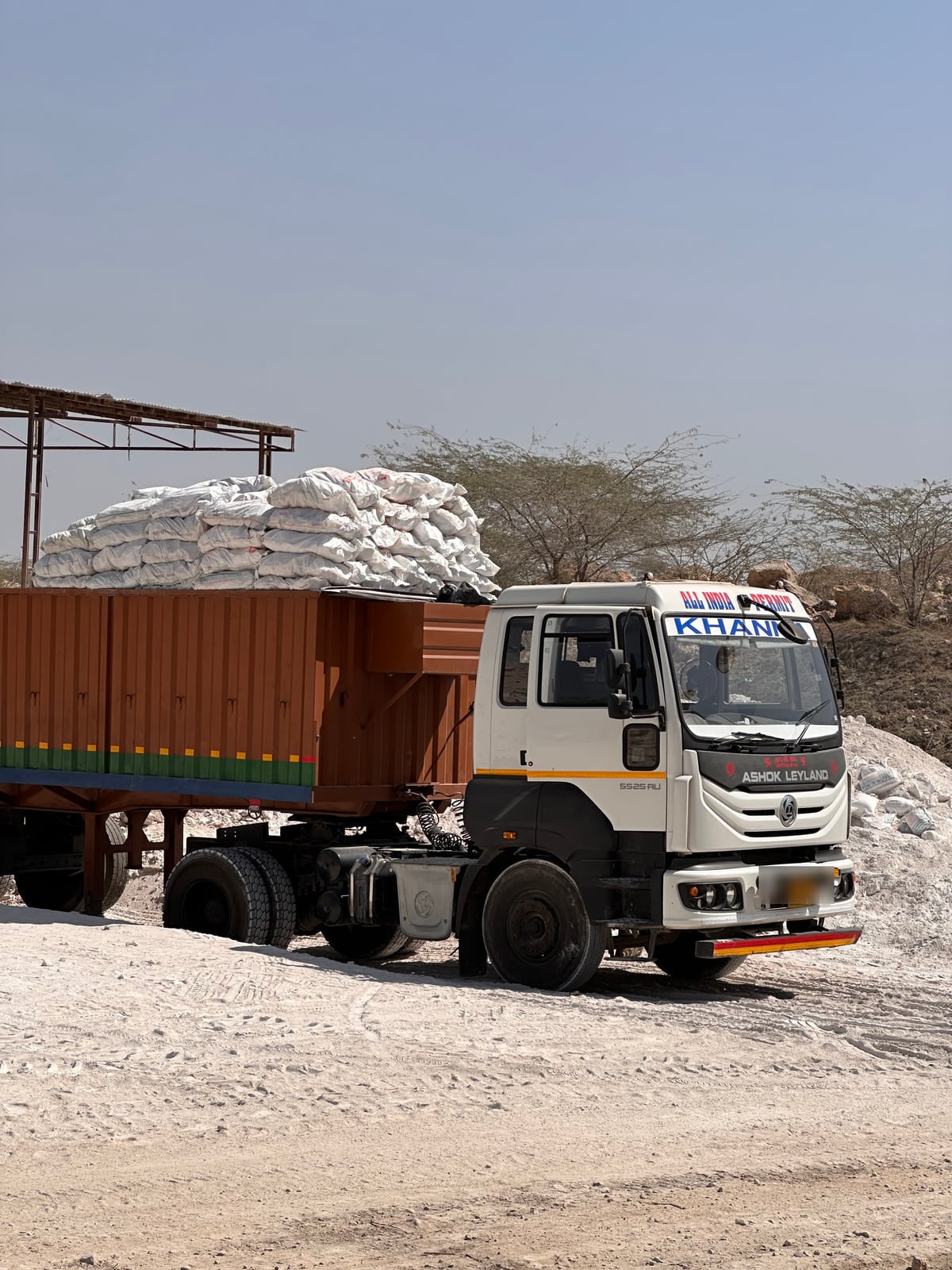
Bagged lime goes straight from the kiln floor onto the truck, with the papers in order before it leaves the yard.
Slide 1 of 7
Every grade is supplied against an agreed size band and packing format. Tell us the duty it has to perform and we will recommend the fraction.
High-calcium burnt lime — Chunna Kali — in lump and graded sizes for metallurgical, chemical and treatment duty.
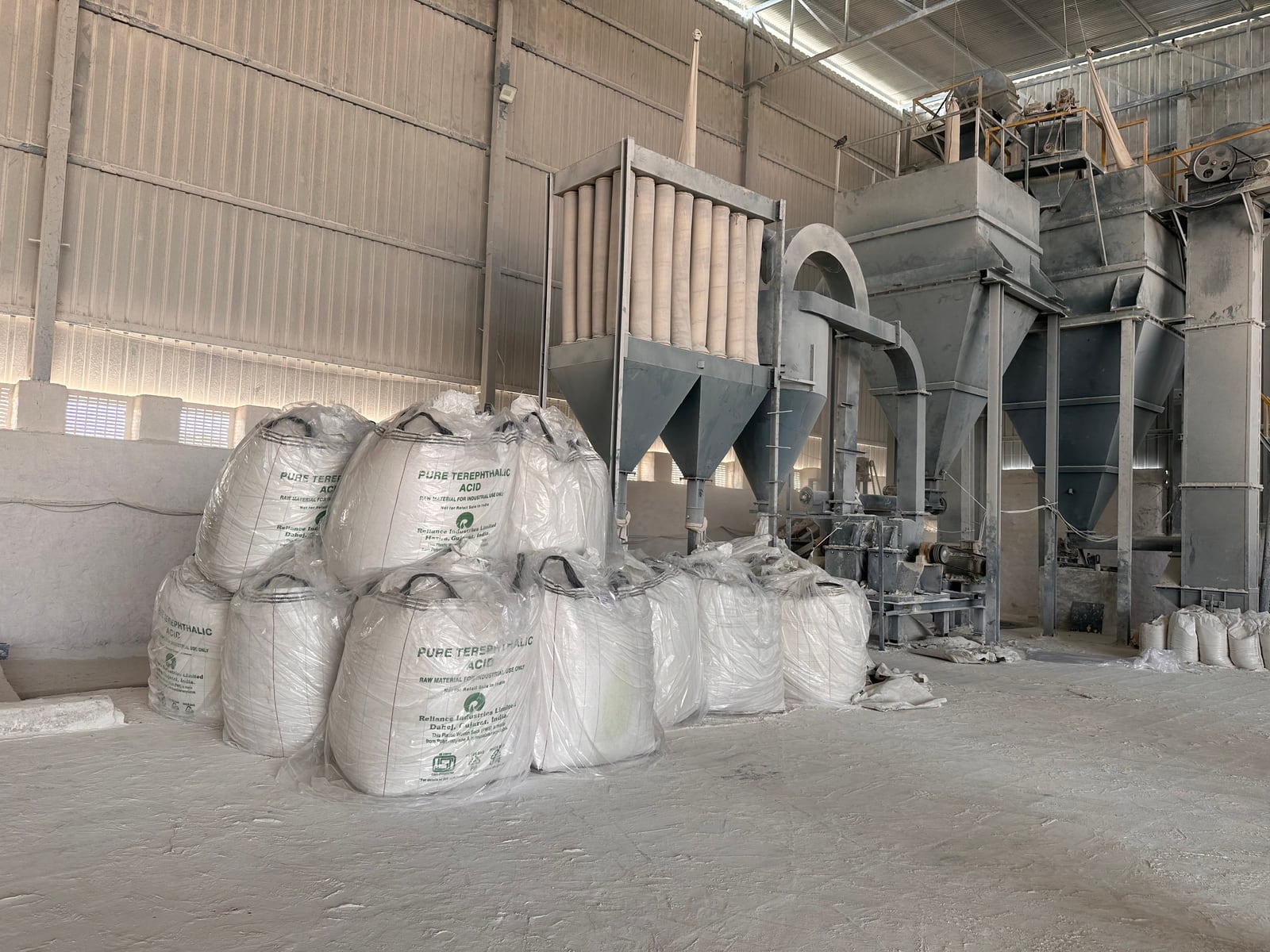
Finely ground calcium oxide — Chuna Kali ground to powder — for rapid-reaction duty where surface area and dosing consistency matter.
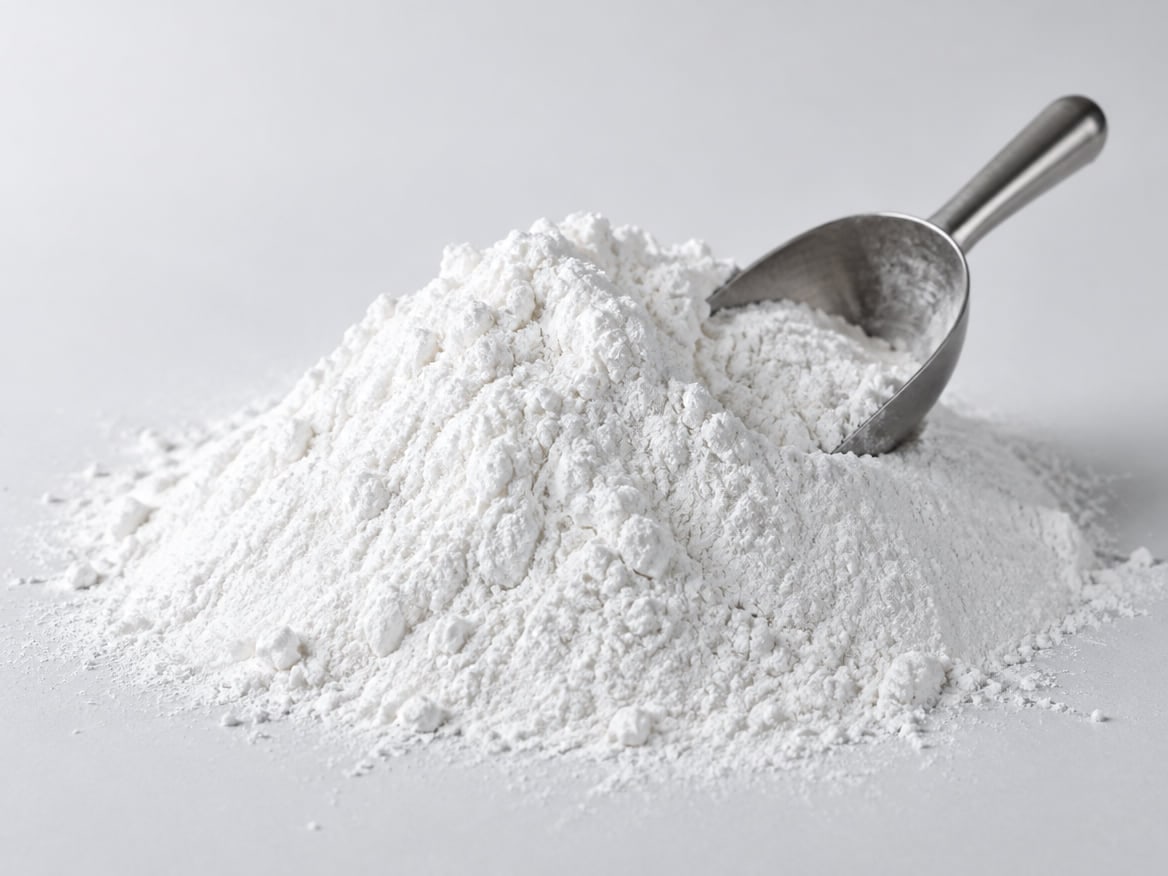
Slaked lime (बुझा चूना) — a stable, ready-to-use alkali for treatment, construction and agricultural duty.
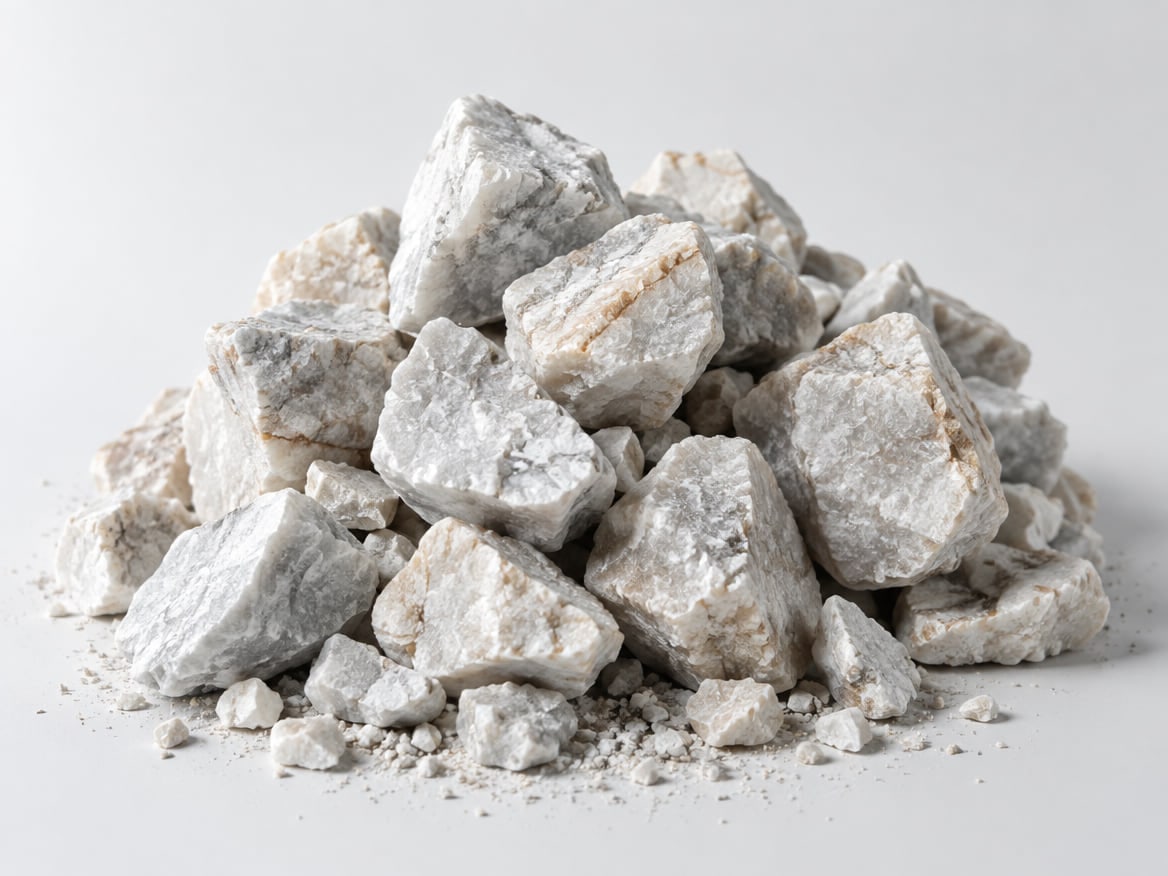
The calcium–magnesium carbonate mineral, supplied graded for steel, glass, construction and soil use.
Quick lime lumps (Chuna Kali), quick lime powder and hydrated lime — manufactured at Borunda, Rajasthan, with dolomite supplied alongside — in bulk to steel, water treatment, construction and chemical industries across India and overseas.
Product, quantity, delivery location and a contact number. The assistant or the quotation form takes a minute.
Request a quoteAsk for a sample, the datasheet or a recent batch test report before you commit.
Request a sampleDispatch from Borunda, Jodhpur — within 7 days of confirmation, timed per order.
Transport and deliveryWe supply the sectors our products are technically suited to. Each one asks something different of the material — reactivity, fineness, consistency, or sheer volume.
Fluxing and slag chemistry in steel and ferro-alloy production.
01Grades supplied to this sector: Quick Lime Lumps · Dolomite
Quick lime (unslaked) and hydrated lime for cane juice clarification, made in our own kilns at Borunda, Rajasthan, and quoted against your mill's specification.
02Grades supplied to this sector: Quick Lime Lumps · Quick Lime Powder · Hydrated Lime
Lime for causticising, PCC filler, bleaching and mill effluent treatment.
03Grades supplied to this sector: Quick Lime Lumps · Quick Lime Powder · Hydrated Lime
pH correction, softening and clarification in municipal and industrial plants.
04Grades supplied to this sector: Hydrated Lime · Quick Lime Powder · Quick Lime Lumps
Soil pH correction and calcium supplementation on acidic land.
05Grades supplied to this sector: Hydrated Lime · Quick Lime Powder · Dolomite
Soil stabilisation, stabilised sub-bases, mortars and plasters.
06Grades supplied to this sector: Quick Lime Lumps · Quick Lime Powder · Hydrated Lime · Dolomite
Neutralisation, precipitation and pH control across chemical manufacture.
07Grades supplied to this sector: Quick Lime Lumps · Quick Lime Powder · Hydrated Lime
Contaminated land, sludge conditioning and pollution control.
08Grades supplied to this sector: Quick Lime Lumps · Quick Lime Powder · Hydrated Lime
This picture shows the application in general — not a customer site, and not a claim of supply to any particular company. Customer-site photographs are only published with permission.
Seven stages stand between raw limestone and a consignment that meets specification. Choose a stage to see it.
Step 01
Everything downstream is decided here. Limestone chemistry — calcium carbonate content, and the silica, magnesia and iron that come with it — sets the ceiling on what the finished lime can be. Deshwali Minerals selects its stone from the Gotan–Borunda limestone belt of Rajasthan for the grade being produced rather than burning whatever is nearest, and feed consistency is what allows a kiln to be run to a repeatable burn rather than being re-tuned batch to batch.
Step 02
Kilns burn a size range, not a size. Feed that is too coarse leaves unburnt cores; feed that is too fine chokes airflow and over-burns. Crushing and screening deliver stone inside the working band, and the screened fractions that fall outside it are directed to graded limestone product rather than wasted.
Step 03
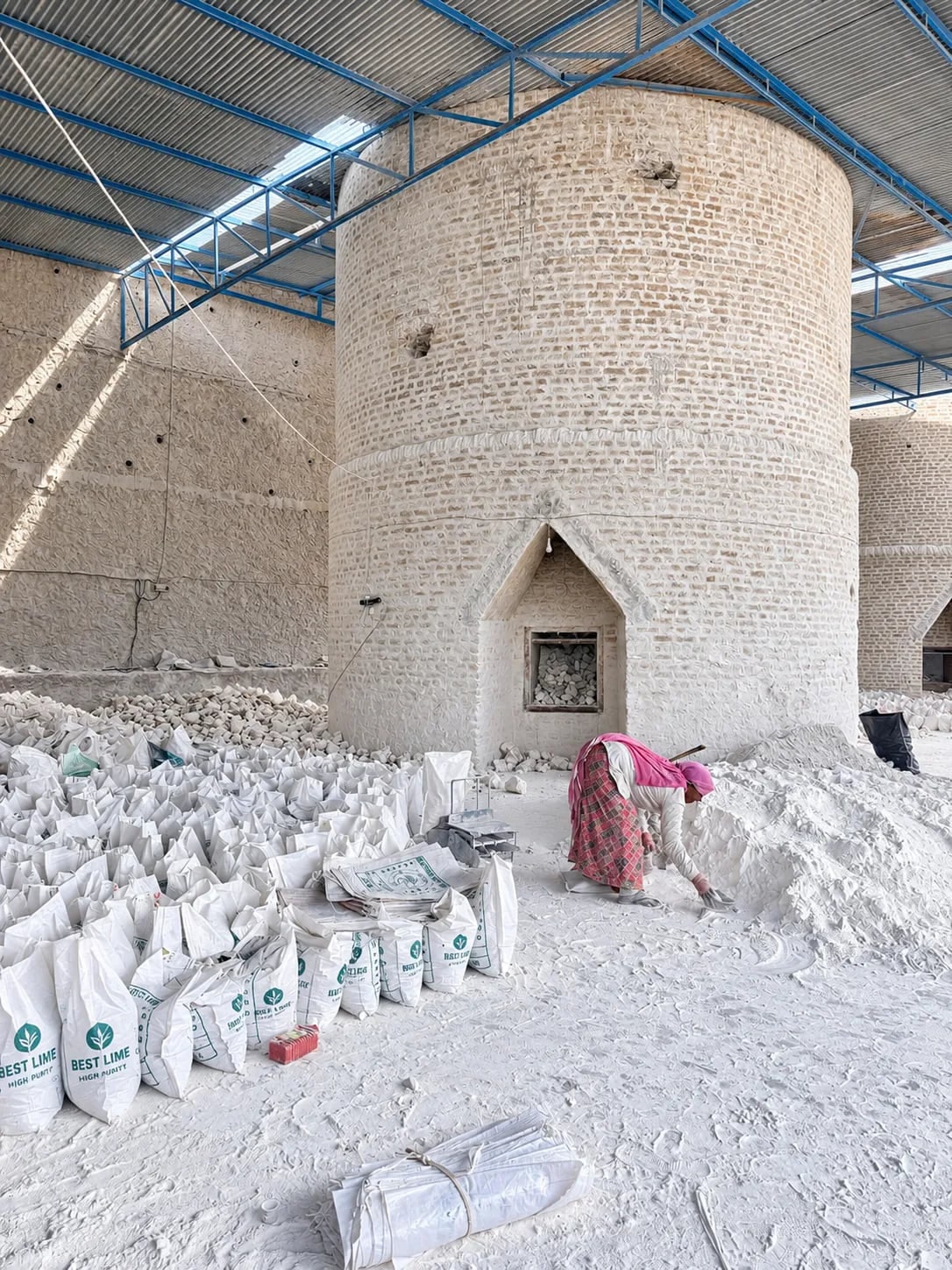
The core transformation: at calcining temperature, calcium carbonate decomposes into calcium oxide and carbon dioxide. Time and temperature together determine reactivity — under-burn leaves residual carbonate, over-burn produces a dead-burnt, sluggish lime. Holding the burn in the right window is what separates a usable industrial reagent from filler. Our kilns are fired with petroleum coke: a high-calorific, low-ash fuel that holds a steady calcining temperature and adds none of the ash that coal firing leaves in the lime.
Step 04
Quick lime leaves the kiln as lump material. From there it is screened into the graded fractions our customers order, ground into quick lime powder where a fine, fast-reacting product is required, or slaked under controlled water addition to produce hydrated lime — calcium hydroxide — as a dry, stable powder.
Step 05
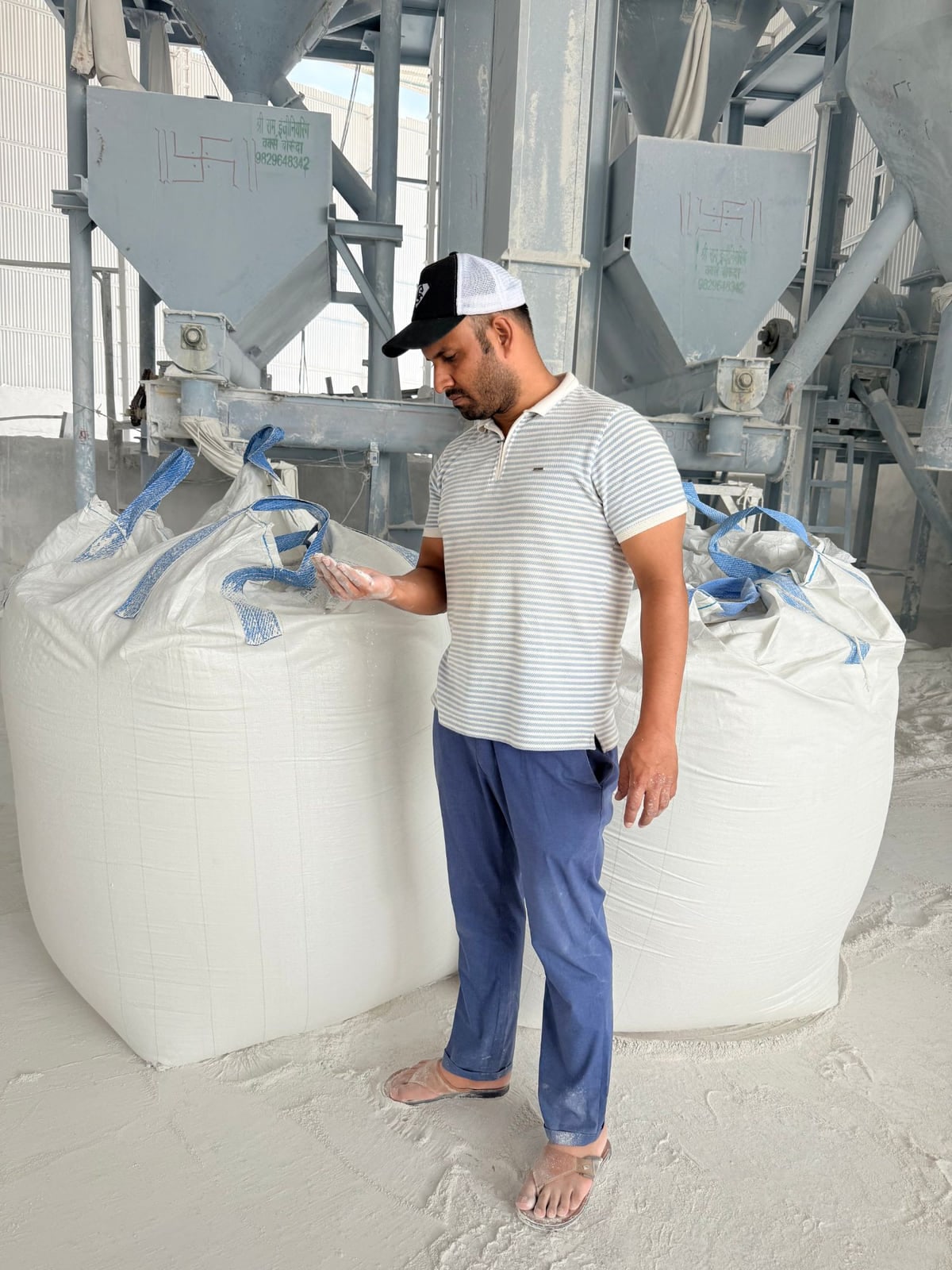
Testing exists to answer one question before despatch: does this consignment match what the customer was promised? For lime that means available lime content, reactivity, size distribution and moisture, checked against the agreed band. Material outside specification is held, not shipped.
Step 06
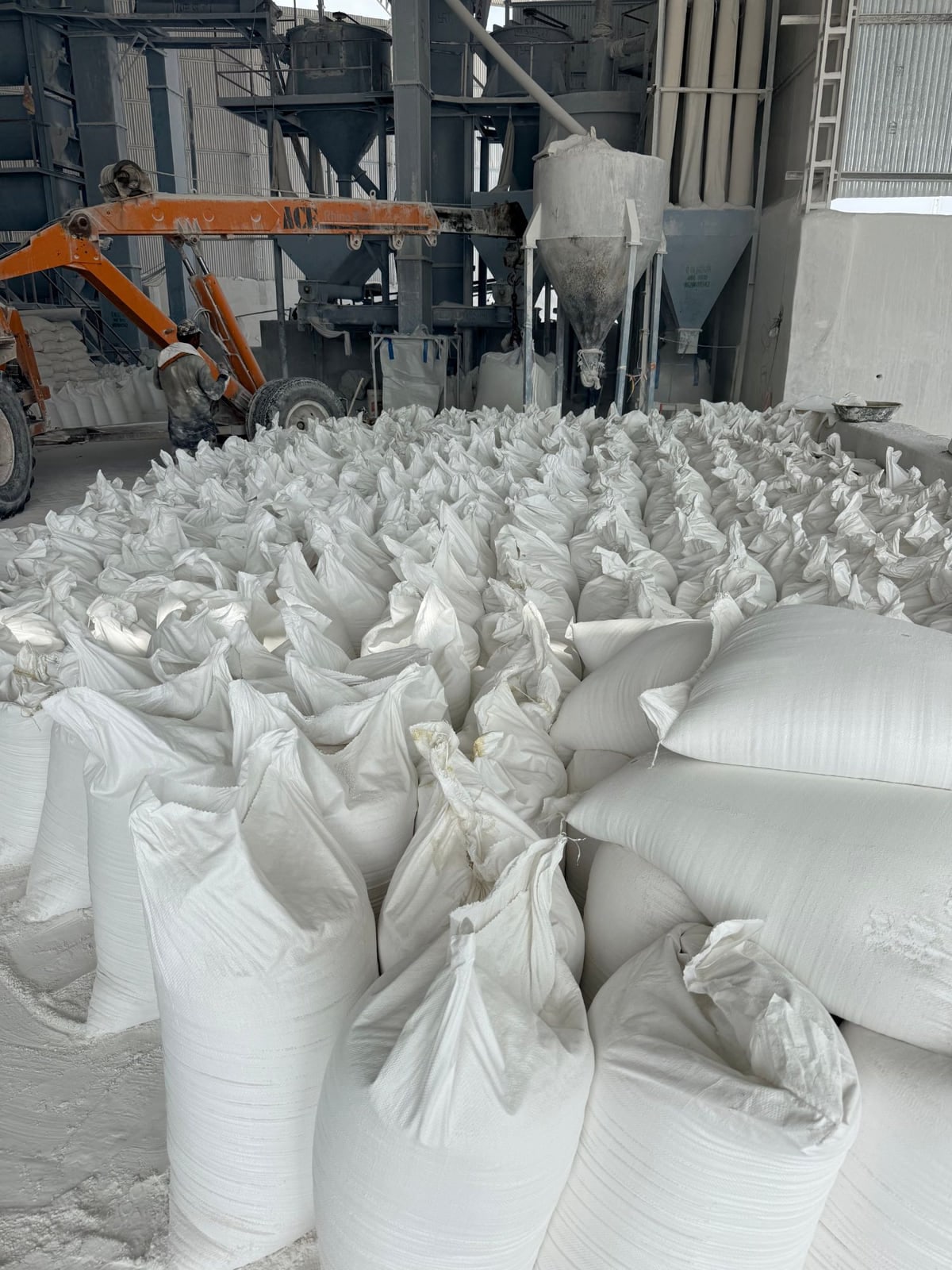
Lime degrades on contact with moisture and air, so packing is a technical decision, not a cosmetic one. Deshwali Minerals supplies in 10 kg and 40 kg bags, jumbo bags and bulk. Longer transit and humid destinations call for sealed or lined packing — specify the destination on your enquiry and we will recommend accordingly.
Step 07
Finished goods are held under cover and rotated so the oldest stock ships first. Loading is arranged by consignment size — bagged goods stacked and sheeted, jumbo bags palletised or slung, bulk material in covered tippers. Export consignments are loaded into containers for onward movement.
Step 01 / 07
Everything downstream is decided here. Limestone chemistry — calcium carbonate content, and the silica, magnesia and iron that come with it — sets the ceiling on what the finished lime can be. Deshwali Minerals selects its stone from the Gotan–Borunda limestone belt of Rajasthan for the grade being produced rather than burning whatever is nearest, and feed consistency is what allows a kiln to be run to a repeatable burn rather than being re-tuned batch to batch.
Step 02 / 07
Kilns burn a size range, not a size. Feed that is too coarse leaves unburnt cores; feed that is too fine chokes airflow and over-burns. Crushing and screening deliver stone inside the working band, and the screened fractions that fall outside it are directed to graded limestone product rather than wasted.
Step 03 / 07
The core transformation: at calcining temperature, calcium carbonate decomposes into calcium oxide and carbon dioxide. Time and temperature together determine reactivity — under-burn leaves residual carbonate, over-burn produces a dead-burnt, sluggish lime. Holding the burn in the right window is what separates a usable industrial reagent from filler. Our kilns are fired with petroleum coke: a high-calorific, low-ash fuel that holds a steady calcining temperature and adds none of the ash that coal firing leaves in the lime.
Step 04 / 07
Quick lime leaves the kiln as lump material. From there it is screened into the graded fractions our customers order, ground into quick lime powder where a fine, fast-reacting product is required, or slaked under controlled water addition to produce hydrated lime — calcium hydroxide — as a dry, stable powder.
Step 05 / 07
Testing exists to answer one question before despatch: does this consignment match what the customer was promised? For lime that means available lime content, reactivity, size distribution and moisture, checked against the agreed band. Material outside specification is held, not shipped.
Step 06 / 07
Lime degrades on contact with moisture and air, so packing is a technical decision, not a cosmetic one. Deshwali Minerals supplies in 10 kg and 40 kg bags, jumbo bags and bulk. Longer transit and humid destinations call for sealed or lined packing — specify the destination on your enquiry and we will recommend accordingly.
Step 07 / 07
Finished goods are held under cover and rotated so the oldest stock ships first. Loading is arranged by consignment size — bagged goods stacked and sheeted, jumbo bags palletised or slung, bulk material in covered tippers. Export consignments are loaded into containers for onward movement.
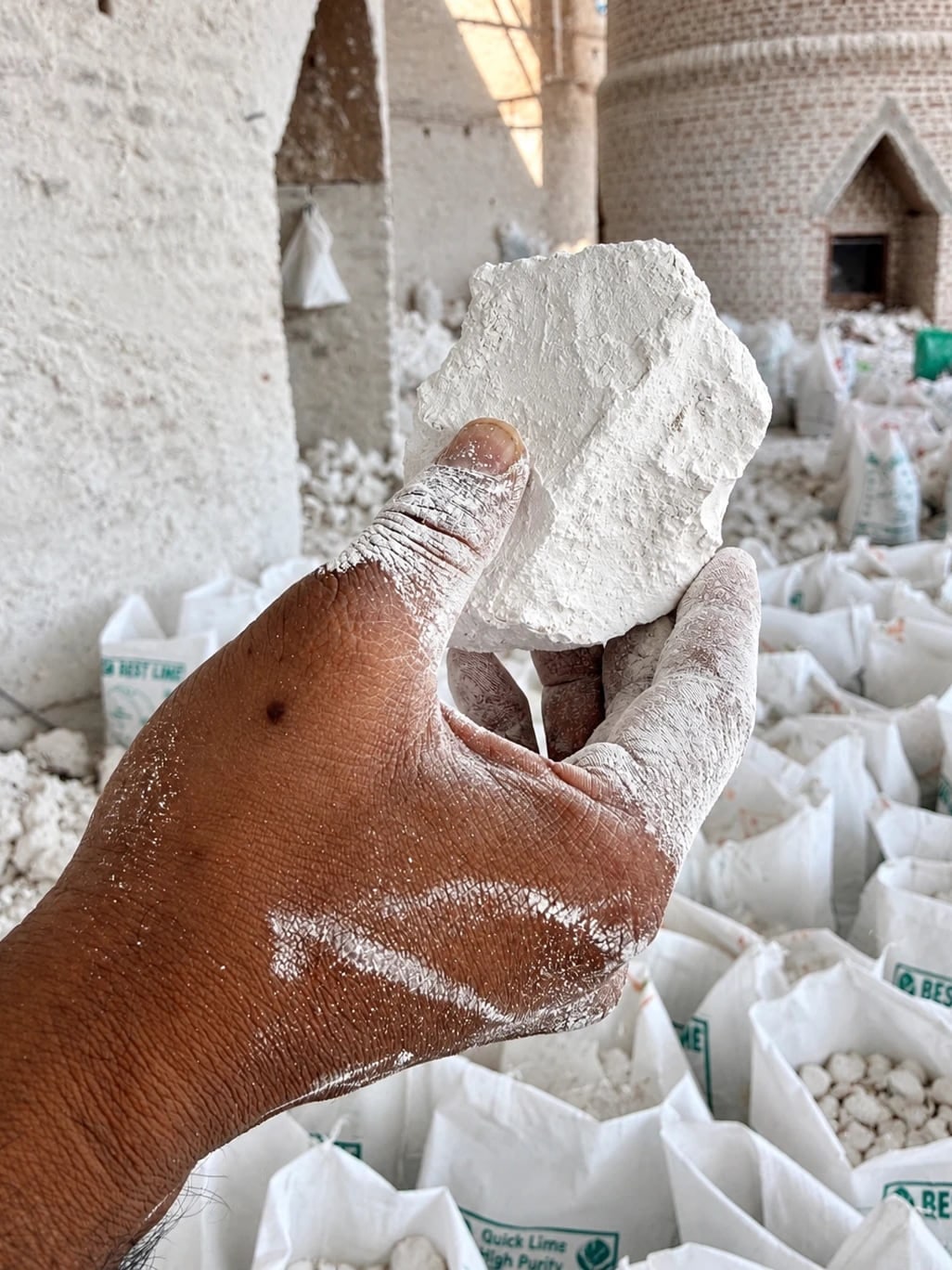
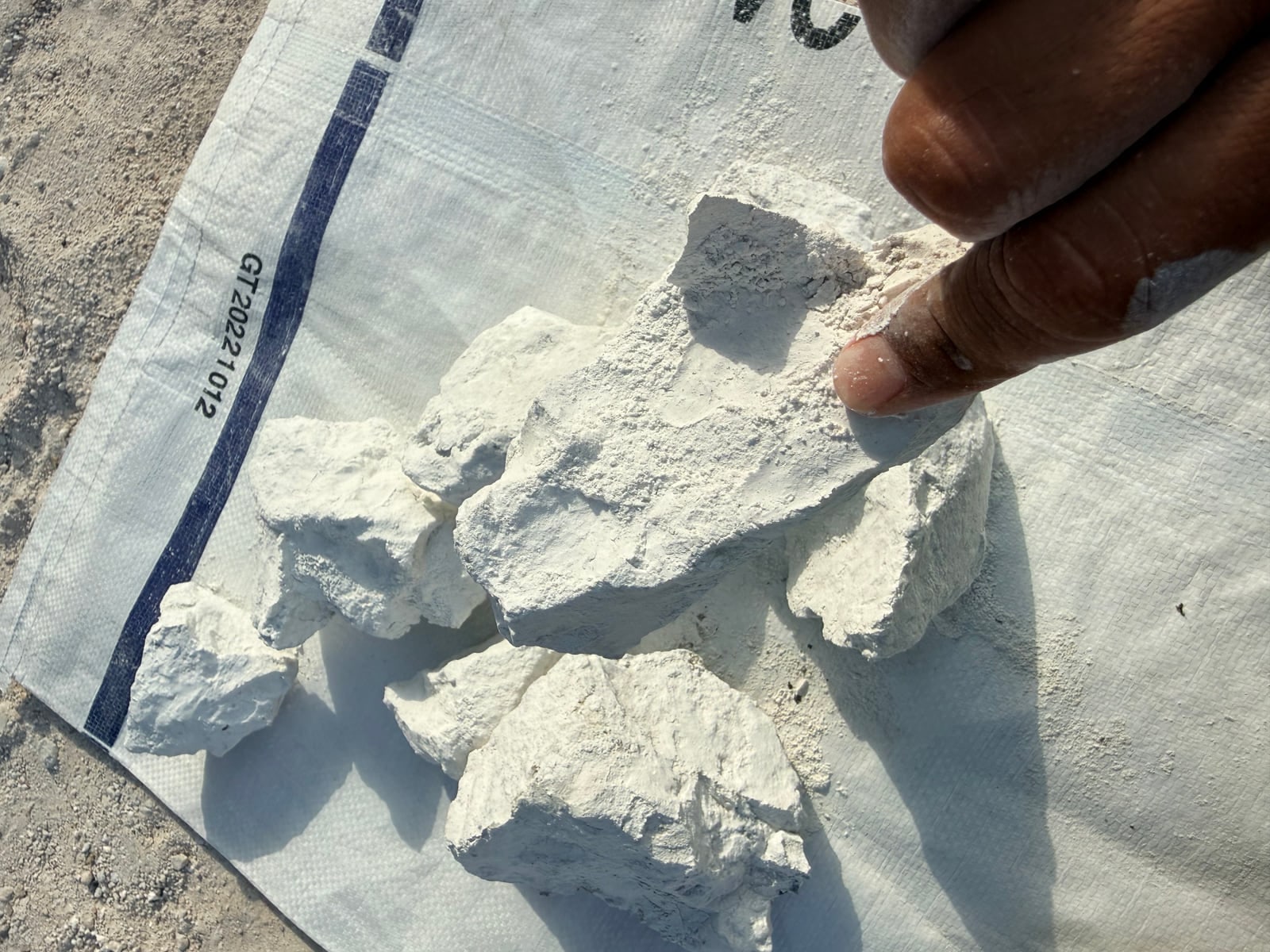
Testing exists to answer one question before despatch: does this consignment match what the customer was told they would get?
Agreed before production
Grade, size band and packing are fixed at the quotation stage, so there is a defined target to test against.
Checked before despatch
Material is verified against that target. Anything outside the agreed band is held rather than shipped.
Documented with the consignment
Batch test certificates can be issued with a consignment where a buyer's process requires them.
Stated specifications for quick lime and hydrated lime are on the product pages. The datasheet, safety data sheet and a recent batch test report are sent on request.
Quality standards and testingThe kilns, the stockyard and the loading shed at the Deshwali Minerals plant in Jodhpur district, Rajasthan.


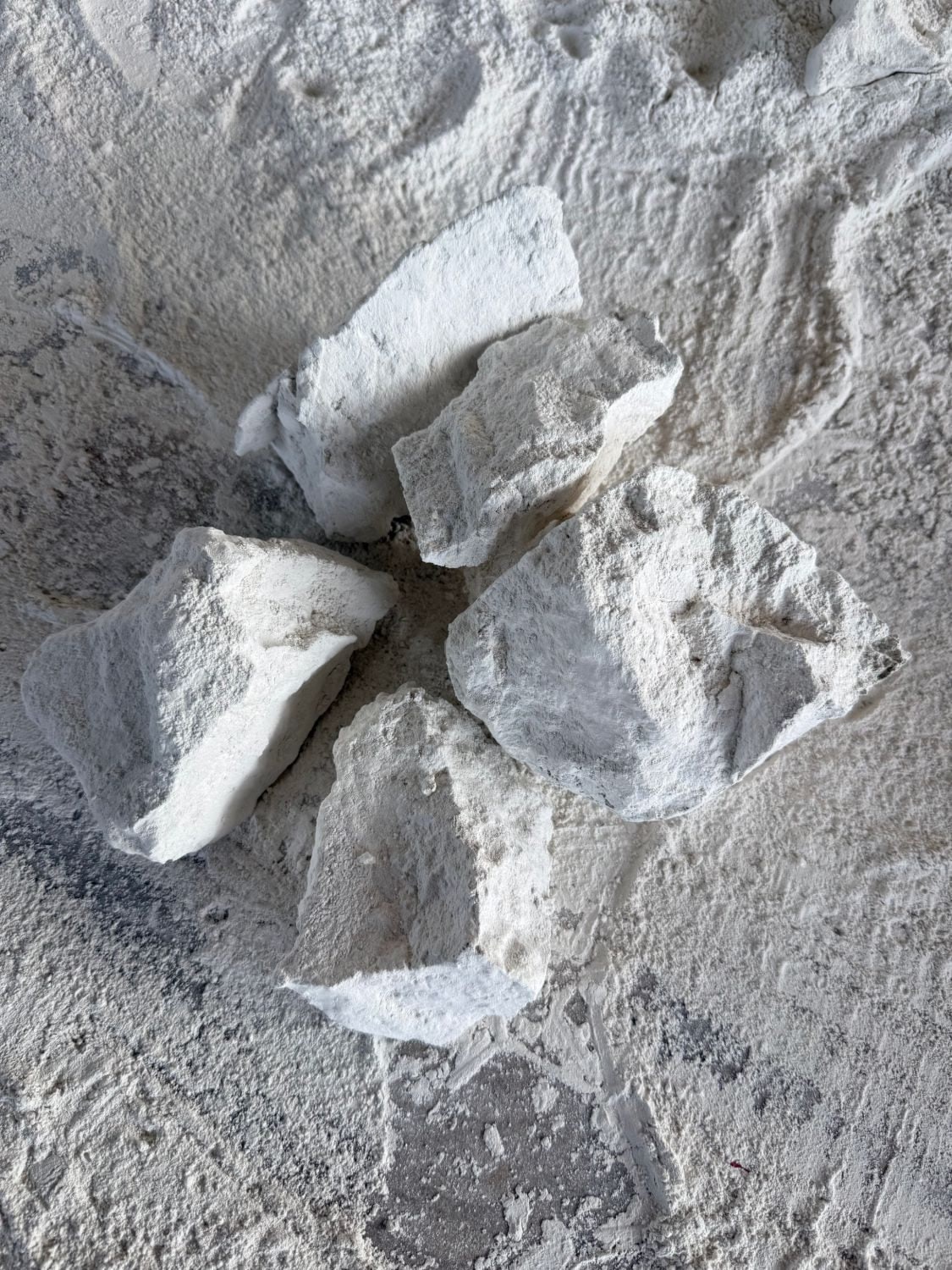
Every plant photograph on this site is the company's own, taken at Borunda; the product close-ups are studio renders.
Lime degrades on contact with moisture and air, so the bag is a technical choice. These are the packing options the office publishes; your quotation confirms the one for your consignment.
Minimum orders start at 42–44 tonnes. Packing, loading and documentation are matched to the destination — a container bound overseas is not packed like a tipper going up the highway.
Bulk & jumbo bag supply
10 kg and 40 kg bags, jumbo bags, or loose bulk depending on handling at your end.
Container loading
Consignments can be stuffed into containers for onward movement by sea.
Documentation support
Proforma and commercial invoice, packing list and certificate of analysis prepared per consignment, with the shipment paperwork tracked to dispatch.
International enquiries
The quotation form accepts overseas addresses, tax IDs and Incoterms.
Deshwali Minerals is a lime manufacturer at Borunda, Jodhpur district, Rajasthan, India. In its own kilns it makes quicklime lumps — known locally as Chunna Kali or Chuna Kali (चुन्ना कली) — quicklime powder and hydrated lime, from high-calcium limestone of the Gotan–Borunda belt. It also supplies dolomite, which is not made in its kilns. It sells in bulk to steel, water treatment, construction, chemical, agricultural and environmental buyers, and its head office is in Jaipur.
To order, request a quotation or contact the sales desk on +91 88750 20202.
Deshwali Minerals burns the lime it sells. The plant is on Gotan Road at Borunda, Jodhpur district, Rajasthan (the head office is in Jaipur), where limestone from the Gotan–Borunda belt is calcined in the company's own kilns and screened, ground or hydrated to the grade a buyer orders.
Three lime products are made here — quick lime lumps (known locally as Chuna Kali or चुन्ना कली), quick lime powder and hydrated lime — and dolomite is supplied alongside them. They go out as consignments rather than parcels, each drawn from a tested lot and dispatched with its paperwork in order. The people who quote an enquiry are the people who answer for it.
We burn the lime we sell, at our own kilns in Borunda. Four things decide whether a buyer comes back, and we hold ourselves to each of them.
Specification is a promise, not a brochure line.
Nobody should have to explain their requirement twice.
Quoted, not guessed.
The next consignment should behave like the last one.
What the company is, what Chuna Kali is, how the lime products differ, who makes them near Borunda and Gotan, and how to order in bulk.
Deshwali Minerals is a lime manufacturer at Borunda, Jodhpur district, Rajasthan, India. In its own kilns it makes quicklime lumps — known locally as Chunna Kali or Chuna Kali (चुन्ना कली) — quicklime powder and hydrated lime, from high-calcium limestone of the Gotan–Borunda belt. It also supplies dolomite, which is not made in its kilns. It sells in bulk to steel, water treatment, construction, chemical, agricultural and environmental buyers, and its head office is in Jaipur.
Chuna Kali — also written Chunna Kali, Chuna Kalli, चुना कली, चुन्ना कली, चूना कली or कली चूना — is the local name in Rajasthan for quick lime lumps: calcium oxide (CaO) as it comes out of the lime kiln, burnt but not yet slaked with water or ground to powder. Deshwali Minerals makes it at its own kilns in Borunda, Jodhpur district.
Quick lime lumps (Chuna Kali) are calcium oxide straight from the kiln, in lump and graded sizes. Quick lime powder is the same calcium oxide ground fine, so it reacts faster and doses evenly; both are caustic and heat up strongly with water. Hydrated lime (slaked lime, बुझा चूना) is quick lime that has already been slaked with water into calcium hydroxide, Ca(OH)₂ — a dry, fine powder that gives alkalinity without that heat, so it is easier to store and dose by hand.
From Deshwali Minerals, which makes Chunna Kali (Chuna Kali, quick lime lumps) at its own kilns near Dharam Kanta, Gotan Road, Borunda (बोरुंदा), from high-calcium limestone of the Gotan–Borunda belt. Buyers in Borunda, Gotan (गोटन) and elsewhere in Rajasthan order directly from the plant in bulk: request a quotation on this website or call or WhatsApp +91 88750 20202. Freight is quoted to your delivery point.
Deshwali Minerals manufactures quicklime lumps — calcium oxide, CaO 85% minimum, known locally as Chunna Kali — at Borunda, Jodhpur district, Rajasthan, and supplies them in bulk to industrial buyers in Rajasthan and across India, in 10 kg or 40 kg bags, jumbo bags or loose in a bulk tipper. It also makes quicklime powder and hydrated lime at the same plant.
Use the Request a Quotation form on deshwaliminerals.com with the product, size, tonnage and delivery point; you get a reference number at once. Or call or WhatsApp +91 88750 20202, or email contact@deshwaliminerals.com. Prices are ex-works, with GST and freight shown separately.
देशवाली मिनरल्स बोरुंदा, जोधपुर (राजस्थान) स्थित चूना निर्माता है। यह अपनी भट्टियों में गोटन–बोरुंदा पट्टी के उच्च-कैल्शियम चूना पत्थर से चुन्ना कली (क्विक लाइम लम्प्स), क्विक लाइम पाउडर और हाइड्रेटेड लाइम (बुझा चूना) बनाती है, और डोलोमाइट की आपूर्ति भी करती है, जो इसकी भट्टियों में नहीं बनता। यह थोक में स्टील, जल शोधन, निर्माण, रसायन, कृषि और पर्यावरण से जुड़े खरीदारों को बेचती है। मुख्य कार्यालय जयपुर में है।
चुन्ना कली — जिसे चूना कली, चुना कली या कली चूना भी कहते हैं — क्विक लाइम की डलियों (क्विकलाइम लम्प्स) का स्थानीय नाम है: भट्टी में पका कैल्शियम ऑक्साइड (CaO), जिसे अभी पानी से बुझाया या पीसा नहीं गया है। देशवाली मिनरल्स इसे बोरुंदा, जोधपुर की अपनी भट्टियों में बनाती है।
देशवाली मिनरल्स गोटन–बोरुंदा पट्टी के उच्च-कैल्शियम चूना पत्थर से बोरुंदा (गोटन रोड, धर्म कांटा के पास) स्थित अपने प्लांट में कली चूना, क्विक लाइम पाउडर और हाइड्रेटेड लाइम बनाती है। गोटन, बोरुंदा और राजस्थान के अन्य स्थानों के खरीदार सीधे प्लांट से ऑर्डर कर सकते हैं; भाड़ा आपके डिलीवरी स्थान के अनुसार बताया जाता है।
Send us the grade, tonnage and delivery point. You will get a reference number immediately and a quotation from our sales team.
Sales enquiries, technical questions and despatch queries all reach the same team at Borunda.
Plant & products
Photos of the Borunda plant, lime products, packing and the team. Tap a picture to see it larger.


